
Emergency Air Duct Cleaning Near Me: What Fox Chase Homeowners Should Do First
If your home has had a fire, a sewage backup near the air handler, or rodents die inside the ductwork, the first call is not to a duct cleaner. Turn the HVAC system off at the thermostat and at the breaker, then document what happened with photos and notes before anyone opens a vent. Call your insurer if the event is covered. Only then does duct cleaning enter the conversation – and what you ask the company before you schedule matters as much as who you call.
That order feels backwards to most people. It isn’t. We’re Air Duct Cleaning Fox Chase, and in our experience the damage that gets worse after a contamination event usually happens in the hours before the cleaning crew arrives, not during the cleaning itself. If you’d rather talk it through with someone before making decisions, call (844) 625-7003. We answer 24/7.
Key Takeaways
- Turn the HVAC system off immediately in any contamination event. This is the single most important first action.
- Most duct problems are urgent, not emergencies. Know the difference before you pay an emergency premium anywhere.
- Photograph and take notes before anyone touches the system. Insurers and restoration professionals will ask for both.
- Ask any company three things: how they contain contamination, how they verify the work afterward, and whether they’ve worked with insurance before.
- Same-day cleaning can handle a lot. It cannot replace a remediation specialist when biological contamination is involved.
What Actually Counts as a Duct Emergency in Fox Chase?
A genuine duct emergency means contamination has entered the ductwork and can still spread. Three scenarios meet that bar for Fox Chase homeowners: soot and smoke residue after a house fire, sewage that backed up into or near the air handler, and a rodent die-off inside the ducts. Everything else – dust, musty smells, a dirty return grille – is urgent at worst, not an emergency.
Here’s why the distinction matters. Emergency-tier events involve contaminants that are actively moving through the system every time the blower runs. Soot particles, sewage bacteria, and decomposition odors don’t sit still. They get pushed into every room the ducts serve, and they settle into the furnace, the coil, and the supply registers. Cleaning a system like that without shutting it down first is like sweeping a floor while the ceiling is still leaking.
The urgent-but-not-emergency tier covers things most Fox Chase homeowners would rather not live with:
- Heavy dust or debris blowing from supply registers
- A persistent musty or stale smell when the system runs
- Visible mold or dark staining around vents or the air handler
- Rodent droppings found in the basement or crawlspace, without confirmation the animal died in the ducts
- Construction dust from recent renovation work
None of those should wait months. None of them require a panicked phone call at 2am either. We answer 24/7 if you need a real person to help you sort out which category you’re in. Fast dispatch from 7am to 7pm, Sunday through Friday.
Why Turning the System Off Is the Most Important First Step
Shut the HVAC system down before you do anything else. That means the thermostat goes to OFF and the breaker for the air handler gets switched off too. A thermostat set to OFF doesn’t always stop the blower in every configuration, and you don’t want to find that out while contamination is still airborne.
This one action does more to limit damage than anything a cleaning crew can do on arrival. Every minute the blower runs, contaminated air gets recirculated. Soot coats the evaporator coil and becomes much harder to remove. Sewage bacteria at the air handler get distributed to rooms that were never wet. Odors from a rodent die-off permeate soft furnishings, carpet, and insulation, and those smells outlast the cleaning if they’ve had hours to soak in.
Once the system is off, keep it off. That’s the hard part for a lot of people in Fox Chase – especially during a stretch of hot weather when the house becomes uncomfortable within a couple of hours. Here’s where a bit of honesty helps: opening windows is better than running the system, and a fan in a window moves air without pulling anything through the ducts. Window units in a closed room can stand in for the central system short-term, as long as they aren’t drawing from the affected space.
Don’t run the system to “see if the smell clears up.” It won’t. It’ll just give the contamination more surfaces to settle on.
How to Document the Situation Before Anyone Enters
Take photos before anyone enters the space, and take plenty. Restoration professionals and insurance adjusters will ask for a record of conditions before cleaning starts, and that record is hard to reconstruct afterward. The documentation step takes fifteen minutes and can matter for weeks.
What to capture, in order:
- Wide shots of each affected room, taken from the doorway
- Close-ups of the source – the sewage backup, the fire damage, the area where the rodent was found
- The air handler and furnace, including the filter and the area around it
- Every supply register and return grille, whether or not it looks affected
- The thermostat reading and its setting, so there’s a timestamped record of when the system went off
Keep written notes alongside the photos. Note the date and approximate time the event happened, whether the HVAC system ran afterward and for roughly how long, and any smells you noticed. Write down the model number of the air handler and the furnace if you can see it. Note whether anyone in the household has asthma, allergies, or a compromised immune system – that detail shapes remediation decisions later.
Don’t throw away the furnace filter. A heavily contaminated filter is evidence of what traveled through the system.
What to Ask an Emergency Duct Cleaning Company Before Scheduling
Ask three questions before you book anyone in Fox Chase: how they contain contamination during the work, how they verify the ducts are clean afterward, and whether they’ve coordinated with insurance before. The answers separate a company equipped for this kind of job from one that isn’t.
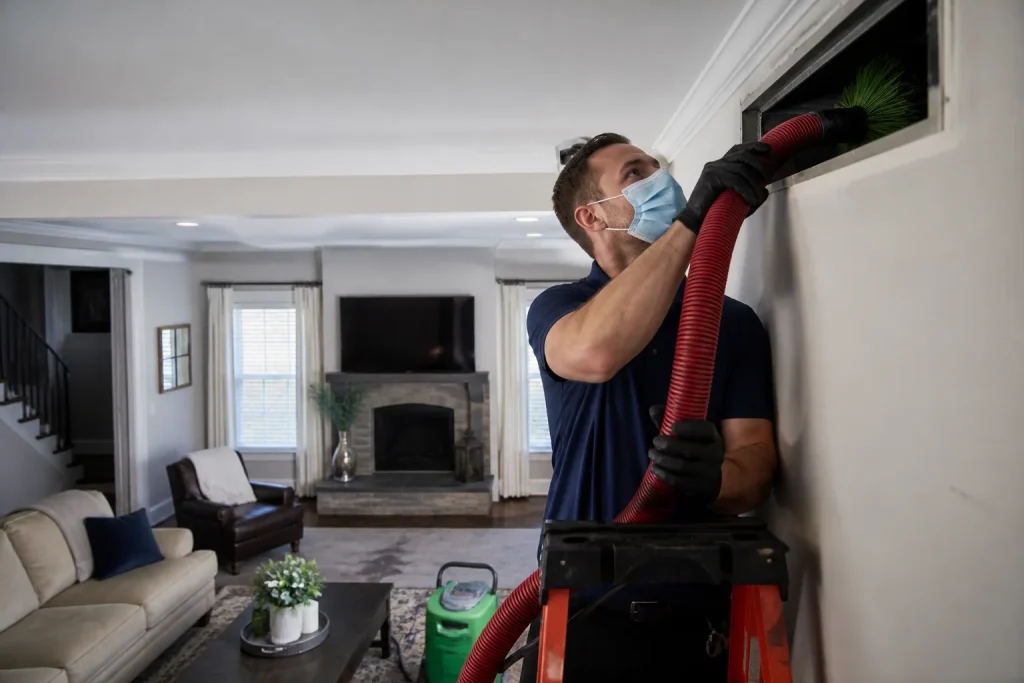
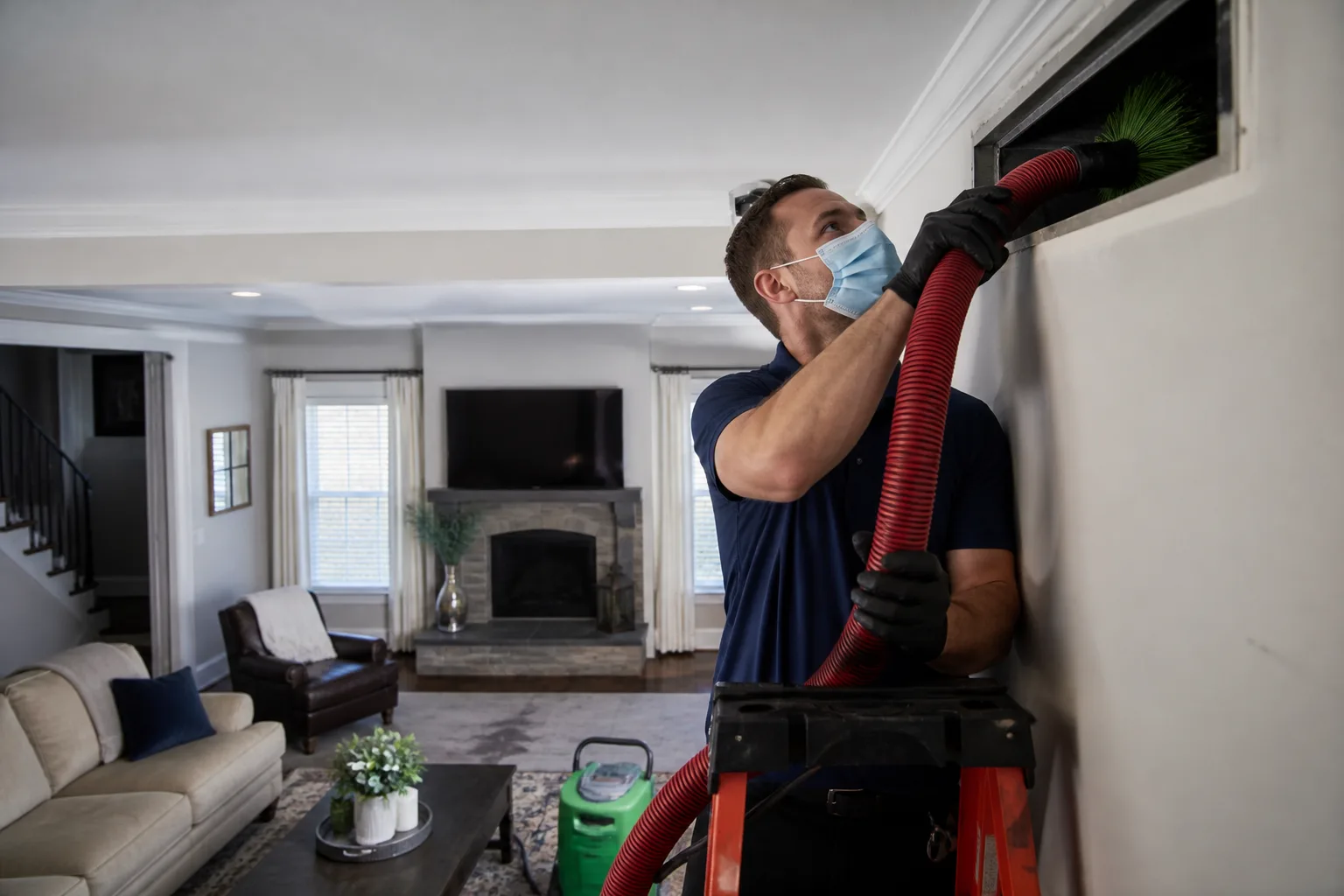
On containment – a proper job seals off the supply and return openings and runs the vacuum under negative pressure, so contamination is pulled into the equipment instead of pushed into the house. If the answer is vague, that’s your answer. Companies that use contractor-grade equipment like the Rotobrush system and Nikro HEPA vacuums work this way by default, because that’s what the equipment is designed for. For remediation-level work, Abatement Technologies tools are the standard we’d expect a company to name.
On verification – how do they prove the work was done? Before-and-after photos of the ducts, a look inside the plenum, a visible check of the air handler afterward. Ask them to show you. We photograph before and after on every job, and we’re happy to walk a homeowner through what the photos show.
On insurance – ask how many remediation claims they’ve worked on with an adjuster. This isn’t a number to quote over the phone; it’s about whether the company knows what a scope of work looks like to an adjuster, and whether they’ll provide documentation in the format restoration work requires. A company that has never done this will show it when you ask.
One more ask worth making: whether the company also handles duct repair and sealing. Cleaning a system only for the same contamination to return through gaps and disconnected joints is half a job. We seal what we find, because the structural cause matters as much as the symptom.
What Same-Day Duct Cleaning Can and Cannot Fix
Same-day cleaning handles more than most people expect. It can remove soot residue, dust, construction debris, and settled contaminants from the ductwork, sanitize the interior with a professional-grade product, and clear odors where the source is the ducts themselves. It can’t remove soot or bacteria from the furnace coil or the interior of the air handler beyond what the equipment reaches, and it can’t substitute for a remediation specialist when biological contamination is severe.
Here’s the split that matters:
- Same-day cleaning handles: soot cleanup inside accessible ductwork, general debris removal, sanitizing after cleaning, dryer vent clearing, and post-construction dust. See our air duct cleaning page for the full scope.
- Remediation comes first when: sewage has reached the air handler insulation, mold growth is active and widespread, or a Category 3 water event has contaminated porous materials. A remediation specialist assesses and removes what cleaning equipment can’t safely reach.
- Remediation comes after when: the ducts need rebuilding, joints need sealing, or filtration upgrades are needed to keep contamination from recurring. That’s where we come back in – we integrate Honeywell and Aprilaire filtration and humidity products so the system doesn’t undo the cleaning.
If a sewage backup near the air handler is the situation in your Fox Chase home, this is the moment to be honest about scope. Cleaning a duct system that still has active biological contamination in the plenum just spreads the problem. Get the assessment first, then get the cleaning scheduled.
When to Call a Pro
Call a professional when contamination has moved past the register into the ductwork, when you can smell it even with the system off, or when you’ve found visible mold or confirmed animal remains inside the ducts. Ignoring any of those doesn’t improve, it just settles. Call (844) 625-7003 to talk through the situation with someone who does this work – we answer 24/7, and fast dispatch runs from 7am to 7pm, Sunday through Friday.
For a dryer vent that’s clogged with lint, a furnace that needs the coil and plenum cleaned, or a system that just hasn’t been touched in years, those aren’t emergencies but they don’t get better on their own. Same-day scheduling is available.
Related services in Fox Chase: Air Duct Cleaning Fox Chase covers the whole picture, including dryer vent cleaning (lint buildup is a leading cause of residential fires, and we treat it as a safety service, not a cosmetic one) and HVAC cleaning for the coil, plenum, and blower.
The Bottom Line
An emergency duct problem is never a duct problem alone. It’s a contamination event that happens to involve the ductwork, and the order of operations matters more than the invoice. Turn the system off. Document everything. Ask the right questions. Bring in a remediation specialist when the situation calls for one, and get the cleaning done with equipment built for the job.
Most homeowners in Fox Chase who call us in a panic don’t need the fastest company – they need to know, before anyone arrives, whether the situation requires remediation first. That’s the conversation worth having before you book anything.
If you’re in Fox Chase and need help, Air Duct Cleaning Fox Chase offers free estimates – call (844) 625-7003. We answer 24/7. Fast dispatch from 7am to 7pm, Sunday through Friday. Our technicians have up to 14 years of experience, and we use Rotobrush and Nikro equipment on the work, Abatement Technologies tools on remediation-level jobs, and Honeywell and Aprilaire products when filtration upgrades make sense afterward.
Frequently Asked Questions
It’s a real emergency if the contamination is actively spreading – fire soot in the ductwork, sewage at the air handler, or a rodent die-off inside the ducts. Dust, musty smells, and dirty registers are urgent, not emergencies. Turn the system off first, then call to talk it through. Call (844) 625-7003 for a free estimate once the situation is safe to assess.
No. Cleaning ducts that have experienced fire, sewage, or animal remains requires proper containment and HEPA equipment to avoid spreading contamination into the rest of the house. A shop vac makes it worse, not better – it stirs particles into the air. That’s a job for contractor-grade equipment and a trained technician. Call (844) 625-7003 to schedule an assessment.
Often yes, when the duct contamination is tied to a covered event like a fire or sewage backup. Coverage depends on your policy and the specific cause. Document everything with photos and notes before anything is cleaned, and talk to your adjuster first. We can work with your insurer on the documentation side – call (844) 625-7003 to discuss what your situation needs.
Same-day scheduling is available. Emergency cleaning for contamination events is triaged based on the situation, and if remediation needs to come first, that’s the order we’ll recommend. We answer 24/7 and dispatch from 7am to 7pm, Sunday through Friday. Call (844) 625-7003 for an accurate timeline for your specific situation.
Written by the team at Air Duct Cleaning Fox Chase.
Need Air Duct Cleaning Help?
Call Air Duct Cleaning Fox Chase - the local pro we connect you with is licensed and insured, with free written estimates in Fox Chase.
(844) 625-7003