
Last updated November 24, 2026
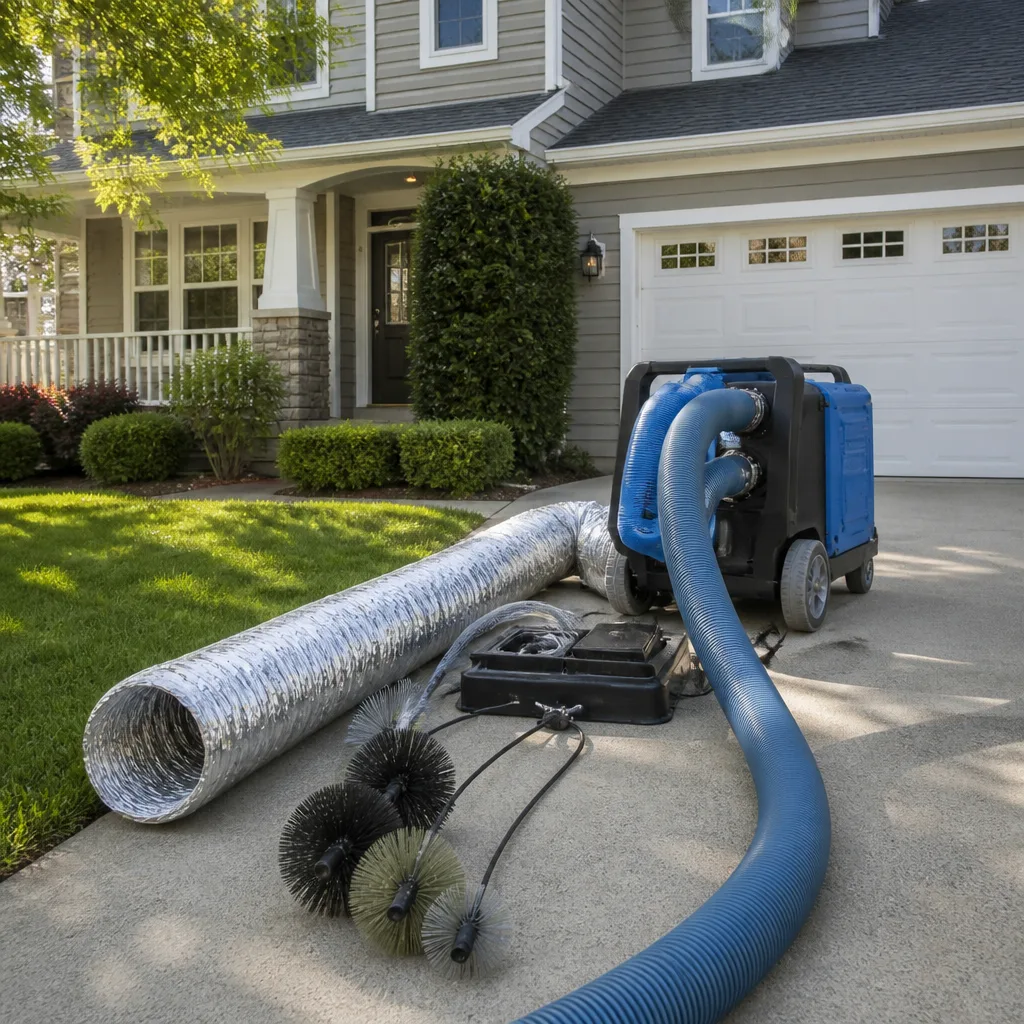 Whole-home duct cleaning
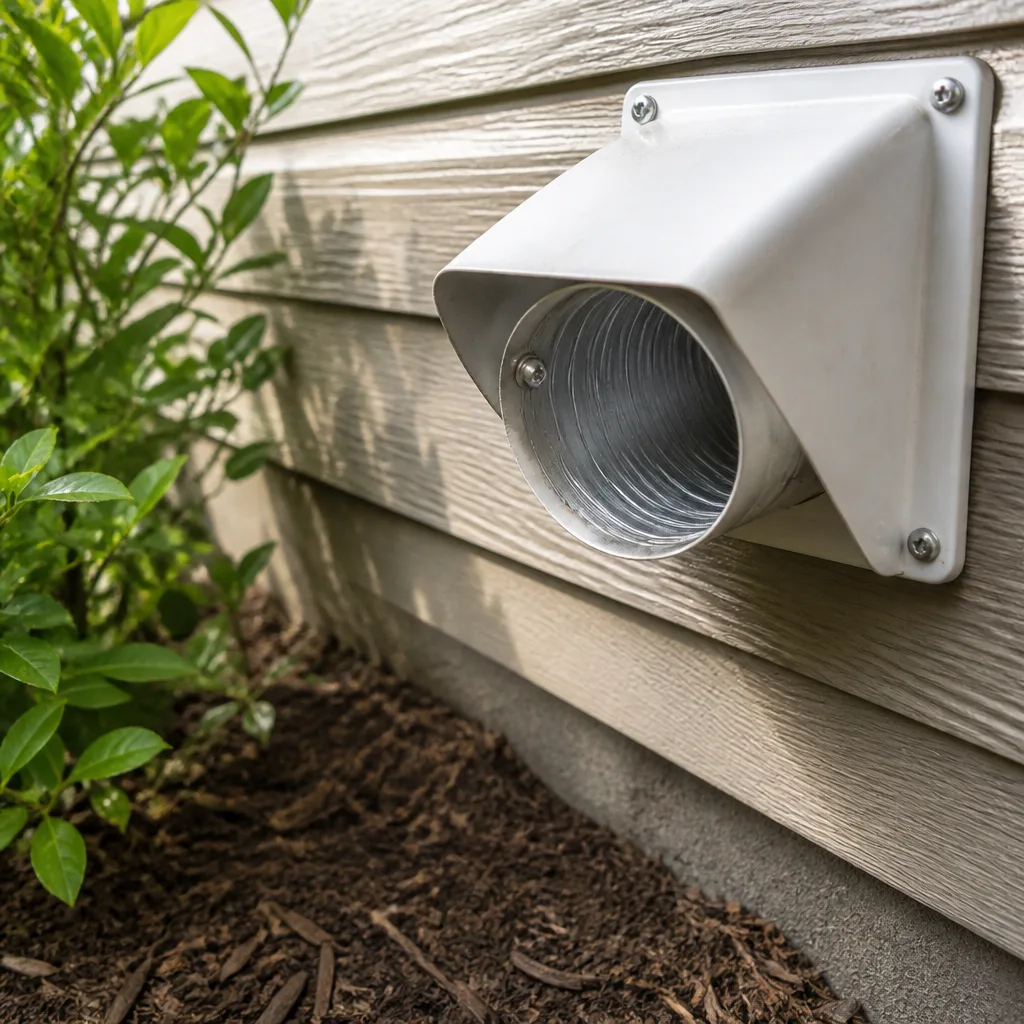 Dryer vent cleaning
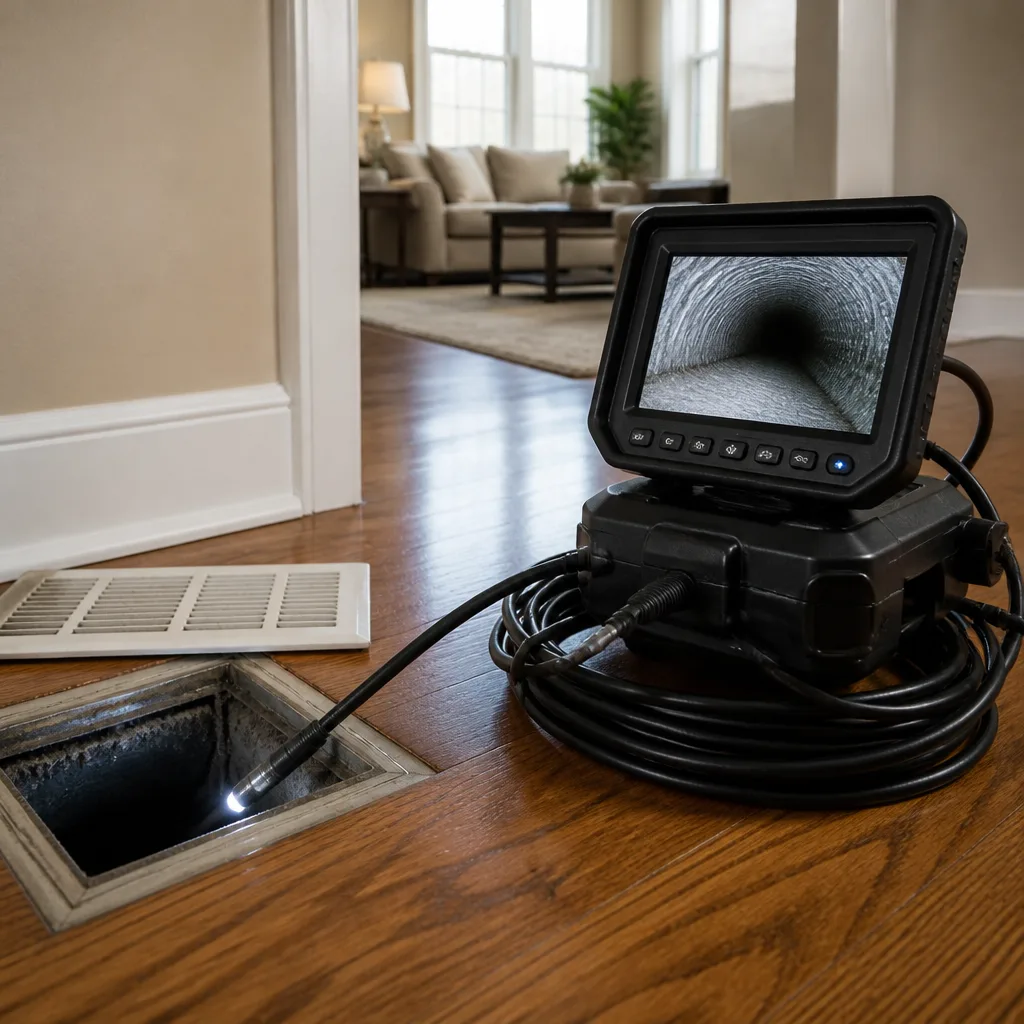 Camera inspection
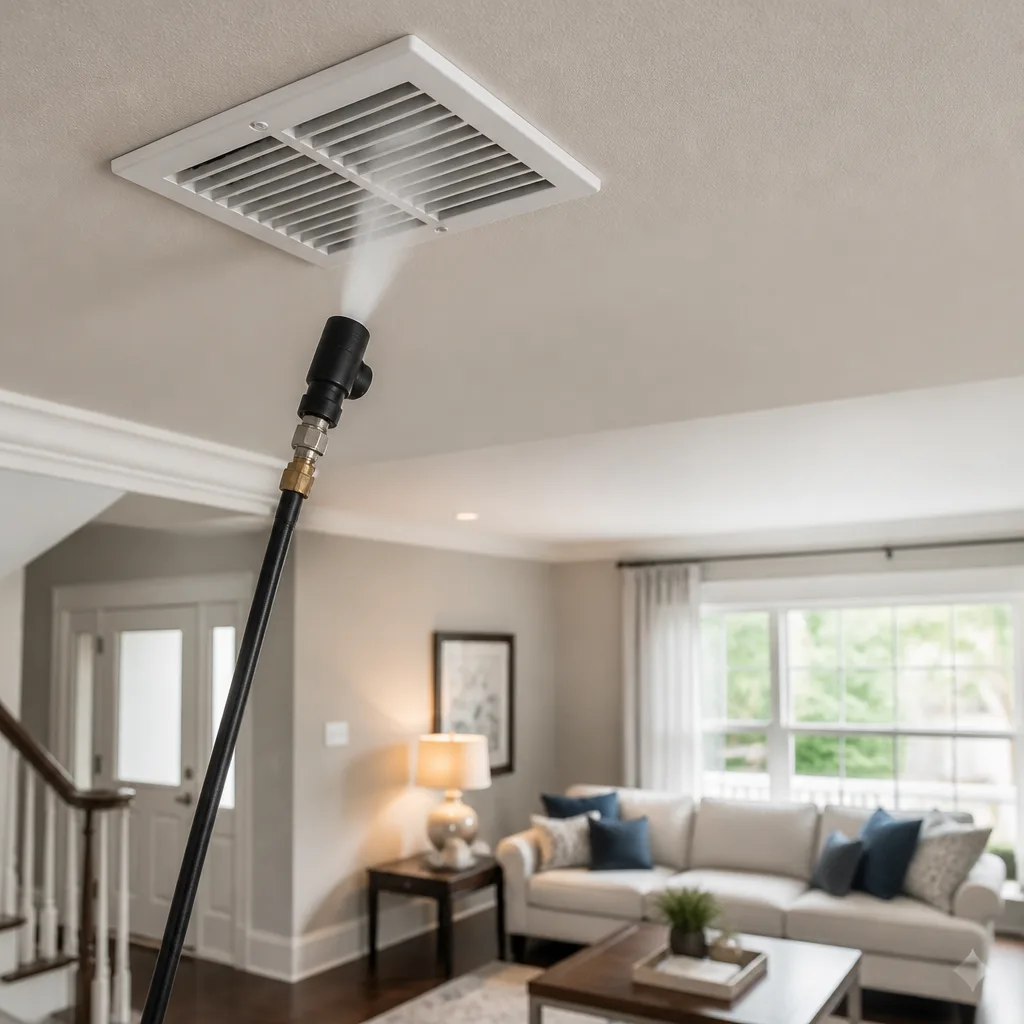 Sanitizing & deodorizing
Whole-system duct and dryer vent check with before-and-after photos - you see exactly what came out of your vents
That "$99 whole-house special" is a bait ad - the real number appears once they are in your hallway, or the "clean" is a shop-vac at the register. We photograph the inside of your ducts before and after instead.
Choosing the Right Air Duct Cleaning Brand: A Buyer’s Guide for Fox Chase
Most duct cleaning contractors never mention the equipment they use. That’s not an oversight. When a crew arrives with a shop vacuum and a length of flexible hose, talking about brands would invite exactly the question they can’t answer. The machinery behind a duct cleaning job tells you more about what a company can actually do than a page of testimonials. In Fox Chase, where postwar brick capes and older twins sit alongside newer construction, the equipment question matters even more, because the ducts in a 1950s house and the ducts in a 2018 build need different tools and different levels of care. This guide walks you through the equipment categories, the brands serious HVAC technicians rely on, and the questions to ask before you book.
Quick Answer
The right duct cleaning brand for a Fox Chase home is the one that shows up with contractor-grade equipment: a real negative air machine, a rotary brush system, and an inspection camera, not a shop vacuum. Ask which brands they use, what negative pressure they pull, and whether they offer repair and sealing, not just cleaning. If they can answer those three questions with specifics, you’re talking to a professional operation. If they can’t, the price doesn’t matter.
Styles & brands we work with
- Whole-home duct cleaning
- Dryer vent cleaning
- Camera inspection
- Sanitizing & deodorizing
Table of Contents
- The Equipment Categories That Define a Professional Duct Cleaning Job
- The Brands HVAC Technicians Actually Use
- How to Tell Contractor-Grade From Consumer-Grade
- Truck-Mounted vs. Portable: Which Is Right for Your Home?
- What Equipment a Fox Chase Job Actually Requires
- Why Equipment Investment Explains the Price Gap
- Repair and Sealing: The Service Equipment Reveals
- Questions to Ask Before You Book
The Equipment Categories That Define a Professional Duct Cleaning Job
A complete professional duct cleaning job relies on three categories of equipment working together. Miss any one of them and the job is partial, regardless of what the invoice says. Here’s what each does and why it matters.
- The negative air machine. This is a high-powered vacuum that pulls the entire duct system under negative pressure, so loosened debris moves toward the machine instead of into your living room. Consumer shop vacuums can’t produce this. A real negative air machine is rated for continuous duty and paired with multiple filters, including HEPA filtration on quality setups.
- The rotary brush system. A rotating brush on a flexible shaft travels the length of each duct run, scrubbing the walls of accumulated dust, dander, and construction debris. This is the part most discount crews fake. Hand-wiping the first foot of a supply register isn’t cleaning. A rotary brush system reaches the full run.
- The inspection camera. Before and after, a camera lets the technician see inside the ducts and show the homeowner. It’s how you know the work was actually done, not just claimed.
In our experience, the presence or absence of these three tools predicts the outcome of a job better than any other signal. A company that owns all three and knows how to sequence them is doing real work. A company with one vacuum and no camera is performing a service. The difference matters most in older Fox Chase homes, where decades of settled debris and sometimes compromised duct joints reward careful, tooled work over a fast pass.
The Brands HVAC Technicians Actually Use
Specific brand names matter here because they tell you which tier of equipment the contractor has invested in. Here’s a short orientation to the names you’ll hear from professionals.
- Rotobrush is the rotary brush system most widely recognized across the professional HVAC industry. It’s a contractor-grade tool built for repeated runs through residential ductwork, with brush heads sized for different duct materials.
- Nikro makes professional HVAC equipment, including negative air machines and vacuum systems designed for the demands of full duct cleaning. It’s a name technicians know.
- Abatement Technologies is used on jobs requiring air-quality remediation, the same tier of equipment used in mold and contaminant abatement work. It’s not standard on every job, but it’s what you want on the job that needs it.
- Honeywell and Aprilaire make the filtration and humidity products that pair with a duct cleaning: media filters, humidifiers, and air cleaners that improve what moves through the system after the ducts are clean. A company that can source and install these is thinking past the cleaning itself.
We use Rotobrush and Nikro on our work, and Abatement Technologies when a job calls for remediation-level air quality tools. The reason to name them is simple: a customer who knows the brands can ask a direct question and get a direct answer. That’s the whole point of this guide. You don’t need to become an HVAC technician to evaluate a quote. You need three or four brand names and the confidence to ask about them. In Fox Chase, where neighbors talk and reputations travel, a company that can name its equipment openly is a company worth a second call.
How to Tell Contractor-Grade From Consumer-Grade Equipment
The easiest way to sort a professional from a discount operator is to ask specific questions and listen for specific answers. Marketing language won’t help you. Direct questions will.
- Ask what negative air machine they use. A real answer sounds like a brand and a model (Nikro, for example). A vague answer sounds like “a powerful vacuum” or “our equipment.”
- Ask whether they use a rotary brush system or air whip. Both are legitimate, but they should know the difference and be able to tell you which they use for your duct material.
- Ask whether they carry an inspection camera and will show you before-and-after images. If they can’t, they can’t prove the work.
- Ask whether they offer repair and sealing. If they don’t, they’ll clean around a problem rather than address it.
- Ask what they do when they find gaps at duct joints or disconnected flex ducts. A qualified contractor has a plan; a discount operator has a shrug.
The pattern is what matters. A professional answers these questions fluently because the answers describe the actual job. A discount operator answers with filler because the equipment list doesn’t hold up. You don’t need to catch anyone in a lie. Just ask, and the quality of the answers will sort the field. For a broader look at what full-service Air Duct Cleaning Fox Chase work involves, our main page covers the basics, and any company you’re evaluating should be able to speak to the same scope.
Truck-Mounted vs. Portable: Which Is Right for Your Home?
There’s a common assumption that truck-mounted equipment is always better. It isn’t. Each setup has a job it’s right for, and neither is automatically superior to the other.
Truck-mounted systems are powerful and can run continuously on larger or more extensive duct networks. For big commercial buildings or sprawling residential systems with many long runs, a truck-mount can be the right tool. The tradeoff is that the truck has to reach the work, and the hose run can be long, which sometimes complicates access.
Portable professional units, like a well-filtered Nikro system, bring contractor-grade vacuum performance into the home. They’re the right choice for most Fox Chase residential jobs, where access around the side of a row house or into a narrow driveway isn’t always easy, and where the duct layout is compact enough that a portable system with proper filtration can do the full job. Portability doesn’t mean weaker. It means matched to the task.
The honest answer to “which is better” is: ask the contractor how they’ll configure their equipment for your house. A professional will explain why they’re bringing what they’re bringing. If the answer is “we always use the truck” or “we only use portable,” it might be right for their business, but it isn’t a considered answer for your home. In older Fox Chase properties with hard-to-reach basements and offset ductwork, the more flexible configuration usually wins.
What Equipment a Fox Chase Job Actually Requires
Fox Chase’s housing stock is a useful lens for evaluating equipment needs, because the neighborhood spans several eras of construction. Ducted HVAC reached most Fox Chase homes in waves, so what’s in one house can be very different from what’s in the next.
- Postwar brick capes and twins: Often retrofit duct systems with short runs, tight clearances, and more than one turn per run. Here, a rotary brush system with the right flexibility and a technician who knows how to feed it through irregular paths does the work. A short air-whip pass isn’t enough.
- Mid-century ranches: Longer runs and slab or shallow attics. Negative pressure matters more here, because long horizontal runs collect debris and a properly sealed system under vacuum is what actually moves it out.
- Newer construction: Flex duct is common, and flex duct demands gentler cleaning tools and careful technique. A brush sized for rigid sheet metal can damage flex if it’s used carelessly. A professional knows the difference before the tool goes in.
- Commercial and new-construction applications: Larger systems, longer runs, and greater volumes justify the truck-mount and higher-capacity negative air machines. A residential service that also serves commercial clients should be able to scale equipment to the job.
Our recommendation for most Fox Chase homes is a job that brings rotary brush cleaning, a filtered negative air machine, and an inspection camera. That’s the baseline. If the contractor is also going to sanitize, you want to see Abatement Technologies or comparable remediation-tier equipment. Weather in Fox Chase varies from muggy summer afternoons to dry winter air, and that swing takes a toll on duct materials over time; the equipment choice should reflect the durability question, not just the cleaning question.
Why Equipment Investment Explains the Price Gap
Here’s the part nobody at a discount duct cleaning company wants to talk about: professional equipment costs money, and its cost sets a floor under what a real job can be priced at. A truck-mount system, a Rotobrush setup, an inspection camera, a filtered negative air machine, training, insurance, and an operational crew all have to be paid for. The math doesn’t work at a very low price point. That’s not greed talking. It’s arithmetic.
When you see an unusually low advertised price, the honest question is what’s been removed to get there. Sometimes it’s the inspection camera. Sometimes it’s the rotary brush, replaced by a superficial vacuum pass. Sometimes it’s insurance. Sometimes it’s the operator’s time, which means half a job. A real professional operation can’t match that price without becoming a different kind of business. That’s why equipment investment is one of the clearest signals of contractor positioning. This is exactly the industry where bait-and-switch pricing has damaged trust. Our answer is one flat price per system, agreed before work begins, with before-and-after photos of your own ducts. No per-vent pricing, no teaser coupon figures, no surprises on the invoice.
For a fuller picture of the scope of work we bring to each job, our air duct cleaning service page lays out the process. If your dryer vent is also on your list, our dryer vent cleaning page explains how we approach the vent work, which addresses a leading cause of residential fires and shouldn’t be treated as a quick lint-pull.
Repair and Sealing: The Service Equipment Reveals
A duct system isn’t just a set of tubes. It’s a network of joints, connections, and seals, and over time those joints loosen, disconnect, and open up. When they do, debris gets pulled in and air leaks out. A cleaning that ignores the breaches will leave you with the same contamination back inside months later. That’s why we treat repair and sealing as a core service, not an upsell after the cleaning.
What this looks like in practice is this: after cleaning, the technician uses the inspection camera to look for disconnected joints, gaps at the plenum, and crushed or kinked runs. Minor gaps get sealed. Flex duct that’s come apart gets reconnected. Runs that are crushed beyond use get flagged for a real fix. That’s the meaning of the phrase “we seal what we find.” It’s how we get to HVAC cleaning that actually improves the system, rather than a job that looks clean and performs the same as before.
The equipment list behind repair and sealing is modest: brushes, mastic, tape, camera. What separates a company that does it from one that doesn’t is the willingness to open the scope and the trained technician who knows what to look for. In Fox Chase’s older housing stock, ductwork is often the least-maintained mechanical system in the house, and the repair question comes up more than the customer expected. That’s normal. A company that plans for it is the one you want.
Questions to Ask Before You Book
The conversation before the booking is the most valuable part of your evaluation. Here’s what to ask, in order.
- What negative air machine do you use, and what filtration does it have? A professional names the brand. A discount operator deflects.
- Do you use a rotary brush or air whip, and how do you choose for my duct material? Both are valid, but the answer should show awareness of material differences.
- Will you show me before-and-after photos of my ducts? If not, they can’t prove the job was done.
- Do you offer repair and sealing, or only cleaning? Cleaning without sealing leaves the cause intact.
- Can you recommend and install filtration or humidity upgrades? Companies that work with Honeywell and Aprilaire can move you toward air quality you can measure, not just a cleaner look.
- Is the price per system or per vent, and what’s the total for my house? Flat per-system pricing is the signal. Per-vent pricing is where the surprise comes from.
Our experience is that the best evaluations happen before anyone shows up. Call and ask these questions. If the person on the phone knows their equipment, you’ve likely found a professional. If they’re vague, keep looking. For local comparisons beyond ducts alone, our guides cover related services, and a thorough company should be able to answer questions about those too.
Common Mistakes to Avoid
- Booking on price alone. The lowest quote is usually the lowest scope. Ask what’s included before you ask what it costs.
- Believing “truck-mounted” automatically means better. In a compact Fox Chase row house, a well-filtered portable system configured for the job is often the right tool, and the contractor should explain why they chose it.
- Accepting a cleanup without an inspection camera. No camera means no before-and-after, which means no proof the ducts were actually cleaned. Skip the job and find someone who brings one.
- Skipping the repair conversation. In houses built in the middle of the last century, disconnected joints are common. If a contractor doesn’t offer sealing, they’re only addressing symptoms.
- Ignoring the dryer vent. A dryer vent that hasn’t been cleaned in years is a fire hazard, not a lint nuisance. If your duct cleaning quote doesn’t cover the dryer vent, ask separately.
- Assuming all companies use the same equipment. They don’t. The shop-vac-to-Rotobrush spread is wide, and you can only see the difference by asking.
- Overlooking filtration upgrades. A clean duct system with a cheap filter and a dry house in winter is only half the air quality story. Ask about Honeywell or Aprilaire options.
See the difference
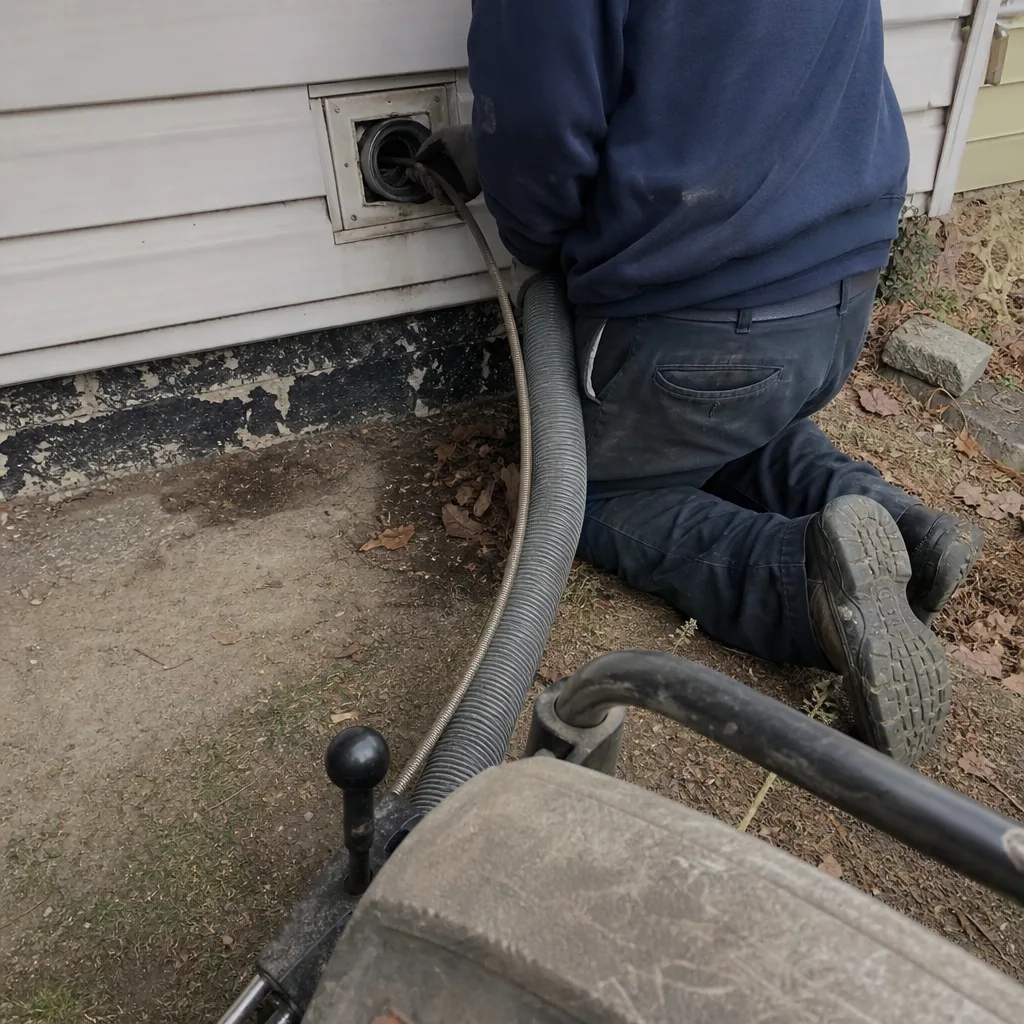 Before
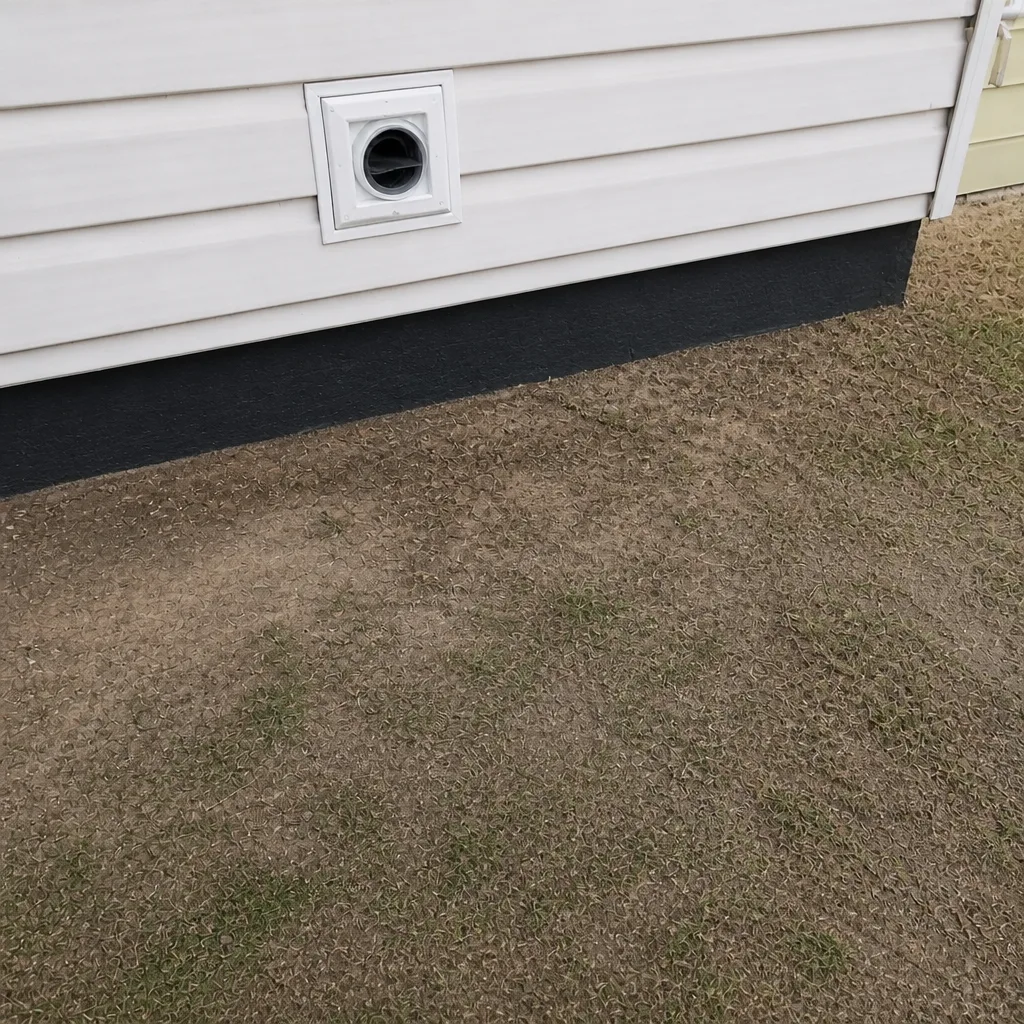 After
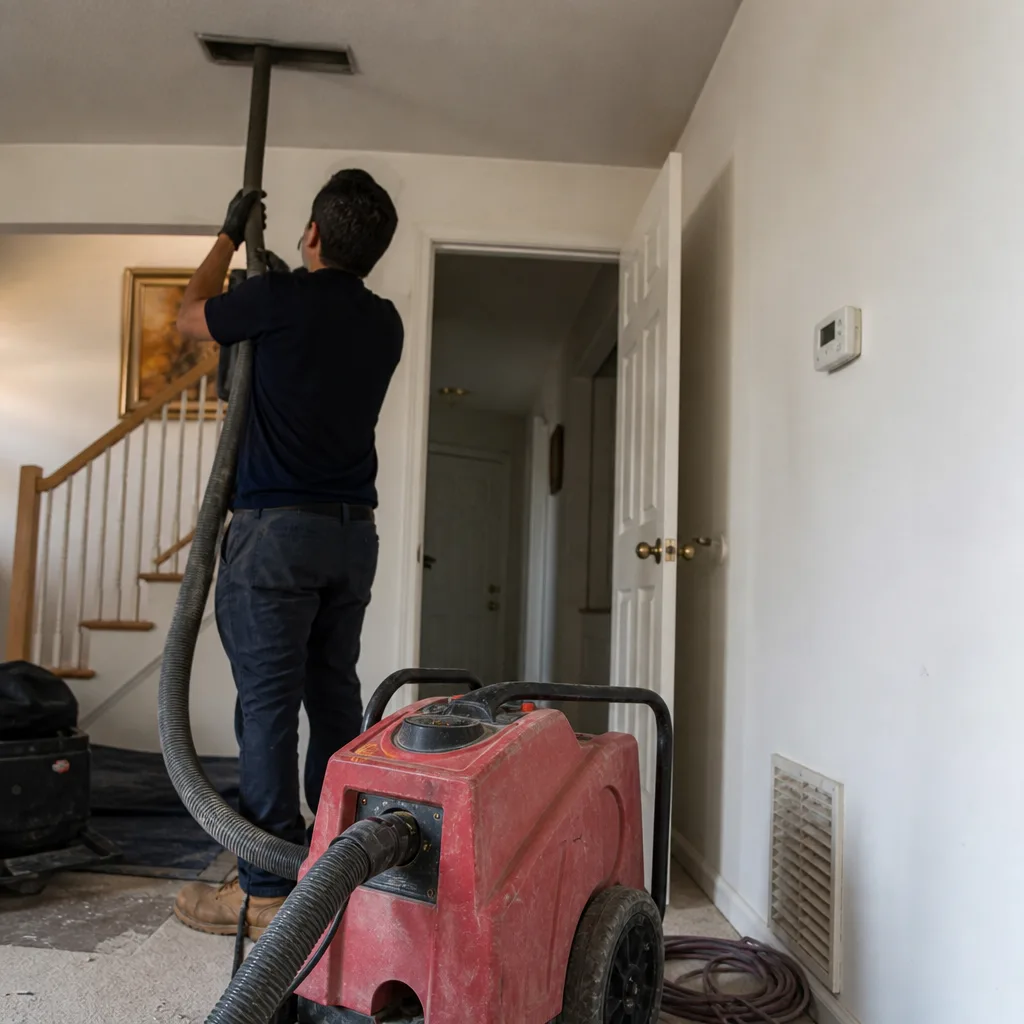 Before
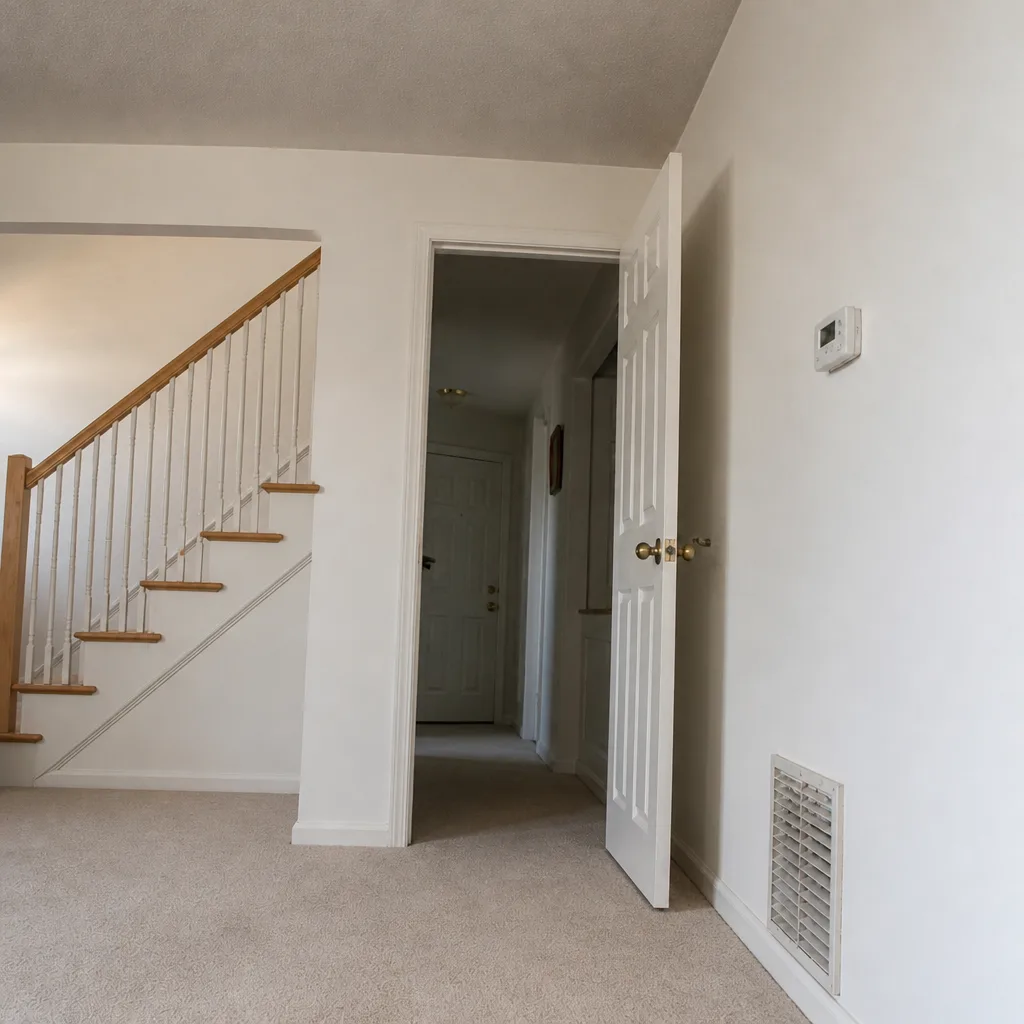 After
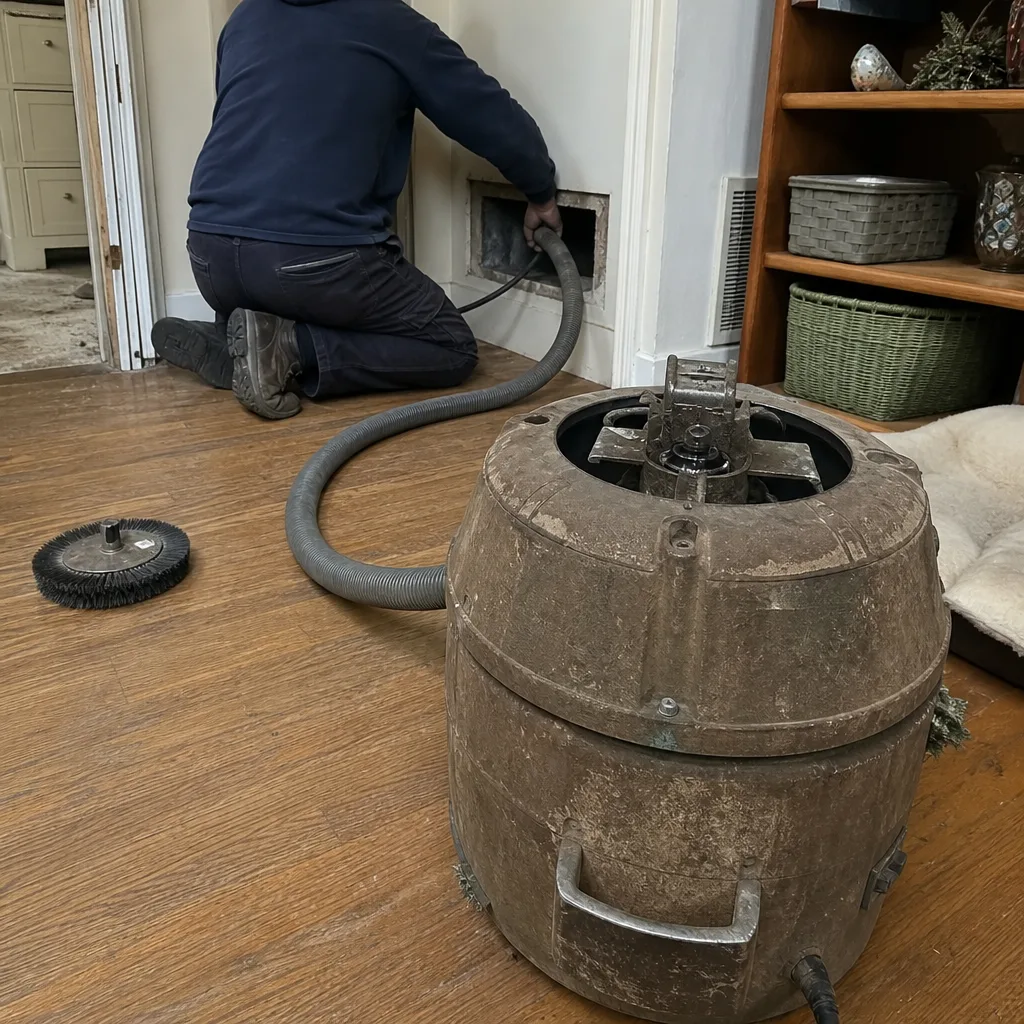 Before
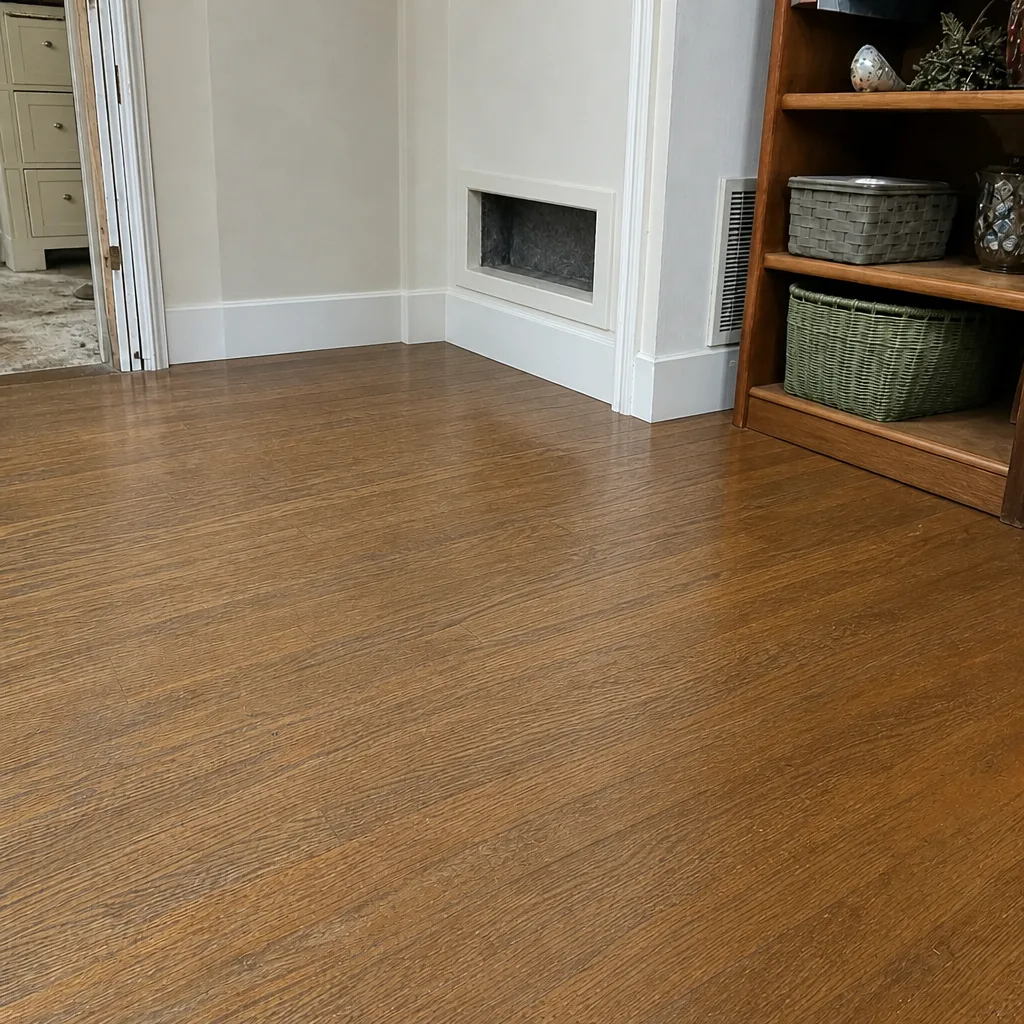 After
When to Call a Professional
Some duct problems show up clearly. You see debris blow out of a supply register when the heat comes on. You smell something musty when the fan kicks on. Your energy bills creep up without an obvious reason, or you notice dust returning within days of vacuuming. In older Fox Chase homes, disconnected joints and crushed flex duct are routine findings once someone actually looks. In newer construction, drywall dust and construction debris left in the ducts are common. If you’ve already had a cheap cleaning that made no visible difference, a professional assessment is the next step, not another cheap cleaning. Air Duct Cleaning Fox Chase offers free estimates in Fox Chase. Call (844) 625-7003. We answer 24/7. Fast dispatch from 7am to 7pm, Sunday through Friday.
Frequently Asked Questions
Look for Rotobrush rotary brush systems, Nikro negative air machines, and Abatement Technologies equipment on remediation jobs. A contractor who can name these brands on the spot is showing you the equipment tier they work at, and that tier is the strongest signal of the quality of the job you’ll get.
Pricing for air duct cleaning in Fox Chase is quoted per system based on the number of runs, the access, and whether repair, sealing, or sanitizing is included. We give one flat price per system in the written estimate before work starts, so the number you agree to is the number you pay. Call (844) 625-7003 for an exact quote. Estimates are free.
Lower quotes typically mean less equipment, less scope, or both. A job without a rotary brush system, an inspection camera, or a filtered negative air machine is a different job than a professional-grade cleaning. Ask what’s actually included before you compare prices, and remember that a flat price per system with photos at the end is the honest frame. Call (844) 625-7003 to walk through what our quote covers.
Ask for before-and-after photos of your own ducts, taken with an inspection camera during the job. A company that can’t produce them isn’t showing you what they did, only what they say they did. We photograph the ducts before and after because it’s the only honest proof. Call (844) 625-7003 to book an estimate with photos included.
No. Truck-mounted systems are the right tool for large systems and commercial work, while a well-matched portable system with proper filtration is often the right tool for a compact Fox Chase home. The best indicator is whether the contractor explains why they’re bringing what they’re bringing, not whether the equipment is on wheels.
Most homes benefit from an assessment every few years, and sooner if you’ve just finished a renovation, moved into an older Fox Chase property, or notice dust, debris, or musty smells from the registers. There’s no single interval that fits every house. An inspection will tell you what your specific system needs, and we treat repair and sealing as part of the same visit rather than a separate call. Call (844) 625-7003 for a free estimate.
The Bottom Line
Picking the right duct cleaning company in Fox Chase comes down to a handful of questions you can ask before anyone shows up. What negative air machine do they use? Do they run a rotary brush system? Do they carry an inspection camera and show you the photos? Do they offer repair and sealing, not just cleaning? Can they source filtration upgrades if you want them? Companies that answer these questions with specifics are working at a different level than the ones that don’t. Equipment investment explains the price gap, and it turns the guesswork of choosing a contractor into a matter of asking. One call covers cleaning, repair, sealing, and air quality if the company is built for it. When you’re ready, call (844) 625-7003 for a free estimate. We answer 24/7, and fast dispatch runs from 7am to 7pm, Sunday through Friday.
Written by the team at Air Duct Cleaning Fox Chase.